
Pros and Cons of Social Media
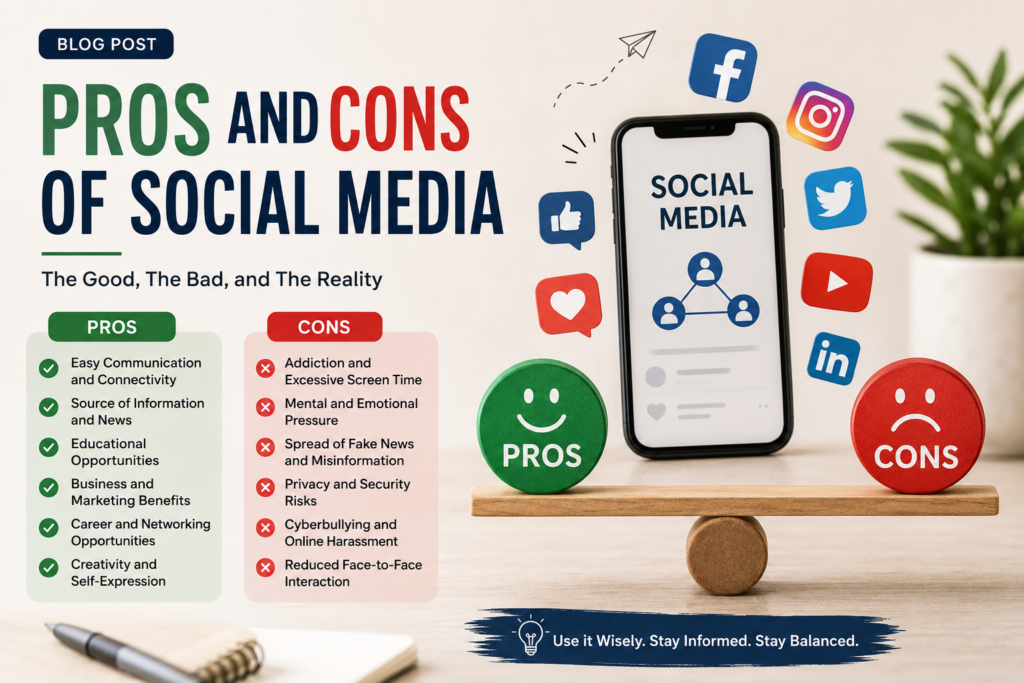
Social media has become an important part of modern life. Platforms such as Instagram, Facebook, YouTube, LinkedIn, X, and Snapchat allow people to communicate, share information, learn new things, and build connections from almost anywhere in the world. What started mainly as a way to stay connected with friends and family has now become a powerful tool for education, business, marketing, entertainment, and professional networking. However, like any technology, social media has both advantages and disadvantages. Understanding its positive and negative effects can help people use it in a healthier and more responsible way. Pros of Social Media 1. Easy Communication and Connectivity One of the biggest advantages of social media is that it makes communication quick and easy. People can stay connected with family members, friends, classmates, and colleagues even when they live in different cities or countries. Messages, video calls, photographs, and updates can be shared instantly. Social media has made the world feel smaller by allowing people to maintain relationships despite geographical distances. 2. Source of Information and News Social media provides access to a huge amount of information. Users can follow newspapers, educational pages, experts, organizations, and professionals to stay updated about current events and new developments. Important announcements and breaking news can reach millions of people within minutes. However, users should verify information before believing or sharing it because not everything posted online is accurate. 3. Educational Opportunities Social media can be an excellent learning platform. Students can find educational videos, tutorials, study materials, online discussions, career advice, and expert opinions. Platforms such as YouTube and LinkedIn can help students learn practical skills that may not always be taught in classrooms. For example, a student interested in digital marketing can learn about SEO, social media marketing, content creation, and advertising through free online resources. 4. Business and Marketing Benefits Social media has transformed the way businesses reach customers. Small businesses can promote their products and services without spending huge amounts of money on traditional advertising. Companies can create content, run advertisements, interact with customers, and build their brands online. Social media is particularly useful for small businesses and startups because it gives them an opportunity to reach a large audience and compete in a digital marketplace. 5. Career and Networking Opportunities Social media can also support professional growth. Platforms such as LinkedIn allow students and professionals to showcase their skills, achievements, projects, and experience. Users can connect with recruiters, companies, industry experts, and other professionals. For students, maintaining a professional online presence can open doors to internships, jobs, collaborations, and networking opportunities. 6. Creativity and Self-Expression Social media gives people a platform to express themselves. Users can share their writing, photography, artwork, videos, opinions, and other creative work. Talented individuals can build an audience without depending entirely on traditional media companies. Many creators have turned their online presence into successful careers by consistently producing valuable and engaging content. Cons of Social Media 1. Addiction and Excessive Screen Time One of the major disadvantages of social media is excessive use. People can spend hours scrolling through posts, watching short videos, and checking notifications without realizing how much time has passed. This can reduce productivity and interfere with studies, work, sleep, and real-life relationships. Developing healthy screen-time habits is therefore important. 2. Mental and Emotional Pressure Social media can create unrealistic expectations. People often post carefully selected pictures showing the happiest or most successful moments of their lives. Constantly comparing oneself with these posts can lead to feelings of inadequacy, insecurity, or dissatisfaction. It is important to remember that social media usually shows only a small and edited part of someone’s life. 3. Spread of Fake News and Misinformation Although social media provides quick access to information, it also allows false information to spread rapidly. Misleading headlines, edited videos, fake stories, and unverified claims can influence people’s opinions. Users should check reliable sources and think critically before sharing information with others. 4. Privacy and Security Risks Sharing too much personal information online can create privacy and security problems. Personal photographs, locations, contact information, and other details may be misused. Cybercriminals can also use social engineering techniques to target users. People should use strong passwords, privacy settings, and two-factor authentication and should avoid sharing sensitive information publicly. 5. Cyberbullying and Online Harassment Social media can sometimes become a place for bullying, trolling, and harassment. Negative comments and abusive messages can have a serious emotional impact, especially on young people. Unlike traditional bullying, online harassment can follow a person into their home through their phone or computer. Users should report abusive behavior, block harmful accounts, and seek support when necessary. 6. Reduced Face-to-Face Interaction Although social media helps people stay connected digitally, excessive use may reduce direct interaction. Someone may spend hours communicating online while having fewer meaningful conversations with people around them. Maintaining a balance between online and offline relationships is essential for healthy communication. Conclusion Social media is neither completely good nor completely bad. Its impact depends largely on how people use it. It can help us communicate, learn, promote businesses, develop careers, and express our creativity. At the same time, excessive use can lead to wasted time, privacy problems, misinformation, cyberbullying, and unhealthy comparisons. The best approach is to use social media consciously and responsibly. Setting limits on screen time, verifying information, protecting personal privacy, following positive and educational accounts, and making time for real-life relationships can help users enjoy the benefits while reducing the risks. Ultimately, social media should be a tool that supports our lives, not something that controls them. When used wisely, it can be a powerful platform for learning, connection, creativity, and personal growth.