
Blog

Your blog category

Blog

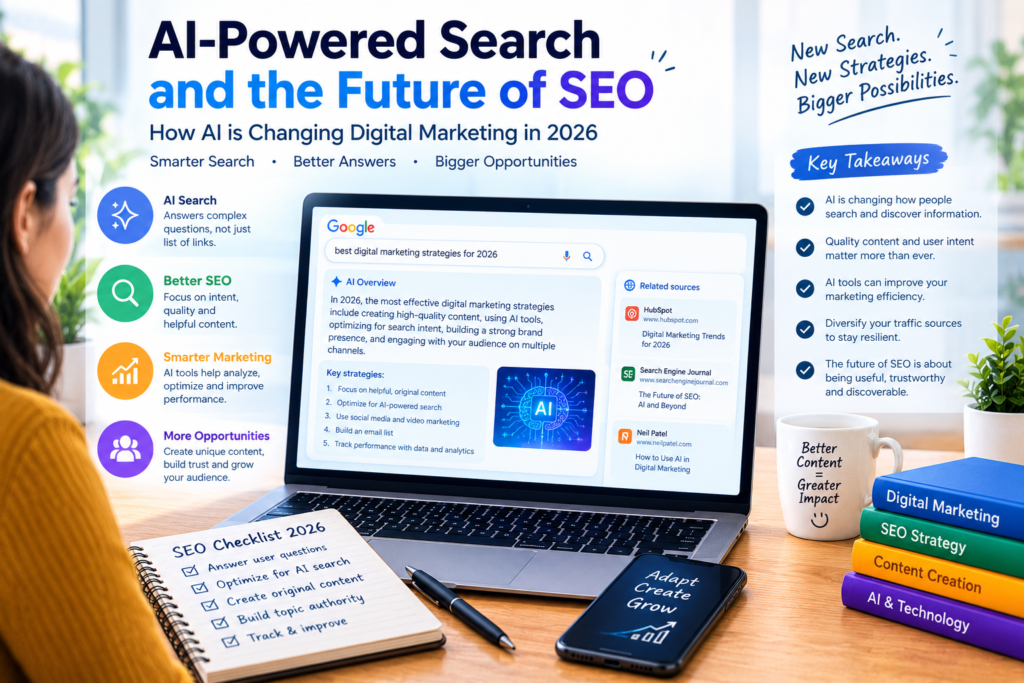
The Future of SEO: How AI-Powered Search Is Changing Digital Marketing in 2026

Digital marketing is changing rapidly, and artificial intelligence (AI) is transforming how people discover information online. Traditional search engines once focused primarily on displaying lists of website links. Today, AI-powered search experiences can generate summaries, answer complex questions, and help users explore topics through conversational interactions. For bloggers, website owners, and digital marketers, this shift creates exciting opportunities as well as new challenges. Ranking on search engines still matters, but businesses must also consider how their content can become a useful source for AI-generated answers. In this article, we’ll explore the latest developments in AI-powered search, their impact on SEO, and practical ways to prepare your website for the future.SEO 1. AI-Powered Search Is Changing How People Find InformationSEO One of the most important developments in digital marketing is the growth of AI-powered search experiences. Google’s AI Overviews and AI Mode help users explore questions with AI-generated responses and links to relevant websites. In October 2026, Google announced further updates designed to make links, source information, timely articles, and related content more accessible within these experiences. For example, someone searching for “How can a small business improve its online presence?” might receive an AI-generated overview covering SEO, social media, content marketing, and website optimization. This changes the way users discover information. Instead of relying exclusively on individual searches, people can explore broader questions and follow up with more specific queries. What does this mean for marketers? Businesses should create content that answers genuine customer questions clearly and provides useful information that readers cannot easily find everywhere else. 2. Traditional SEO Still Matters, but Content Quality Is Essential With AI becoming more prominent in search, some website owners may wonder whether traditional SEO is still worthwhile. The answer is yes. However, successful SEO requires more than inserting keywords into articles. Search engines need to understand what a page covers, while readers need information they can trust and use. Here are several practices worth prioritizing: Google has also introduced new tools for website owners to understand how their pages appear in generative AI search experiences. These tools include reporting about page appearances and impressions, helping publishers better understand their visibility. For BloggersBuzz, this means publishing helpful, original articles rather than producing large quantities of repetitive content. 3. AI Is Making Digital Marketing More Efficient AI is not changing search alone. It’s also helping marketers analyze performance and identify opportunities more efficiently. In August 2026, Google announced additional AI-powered capabilities across Google Ads and Google Analytics, including tools designed to summarize performance insights and help marketers make informed decisions. These developments demonstrate how AI can support everyday marketing activities. For example, a small business might use analytics to discover that visitors frequently read its product guides but rarely visit its pricing page. The marketing team could investigate whether its calls to action are unclear or whether readers need more information before making a decision. AI can help identify patterns and suggest possible explanations, but marketers should verify those insights before changing their strategies. The goal is not to automate every decision. It’s to reduce repetitive work and spend more time understanding customers. 4. Content Creators Have New Opportunities to Stand Out As AI-generated content becomes easier to produce, publishing generic articles is unlikely to be a sustainable way to build a distinctive website. Readers need a reason to choose your content over countless similar pages. You can create that value by sharing: Imagine writing an article about social media marketing. Instead of simply listing common tips, explain how a business could develop a weekly content calendar, measure engagement, and improve future posts based on the results. That extra depth makes the article more useful to readers and gives your website a clearer identity. AI can assist with research and outlining, but human judgment, fact-checking, and original thinking remain important. 5. How to Prepare Your Website for AI Search You don’t need to rebuild your website or abandon your existing SEO strategy to adapt to AI-powered search. Start with these practical steps: Step 1: Answer questions directly. Give readers a clear answer near the beginning of each section before exploring the details. Step 2: Build topic authority. Publish related articles that cover your niche from different angles and connect them with relevant internal links. Step 3: Demonstrate credibility. Use accurate information, cite reliable sources, and clearly distinguish facts from opinions. Step 4: Improve the user experience. Make your website easy to navigate on mobile devices, with readable text and helpful visuals. Step 5: Monitor performance. Review available search and analytics reports to understand which pages attract visitors and where improvements may be needed. Remember that appearing in AI-generated answers is not guaranteed. These practices help create a stronger website, but individual search features and visibility can change over time. 6. The Challenges Marketers Should Not Ignore Although AI-powered search offers opportunities, it also introduces uncertainty. When users receive answers directly within search results, some may not need to visit a website. This can make organic traffic less predictable for certain types of content. AI-generated summaries can also contain errors, while automated content tools may produce repetitive or misleading information if their outputs are not checked carefully. To reduce these risks, avoid relying entirely on search traffic. Build additional ways to connect with your audience, such as an email newsletter, a recognizable brand, useful social media content, and a loyal readership. Diversifying your traffic sources can help your website remain more resilient as digital platforms evolve. Conclusion AI-powered search is creating a new chapter in digital marketing. From conversational search experiences to smarter analytics, technology is changing how businesses create content, understand audiences, and attract potential customers. However, the fundamentals of successful marketing remain valuable: understand your audience, answer their questions, provide reliable information, and build trust over time. For BloggersBuzz, the best strategy is to combine modern AI tools with thoughtful SEO, original content, and a strong focus on readers. The future of SEO isn’t just about getting your website ranked. It’s about
Blog

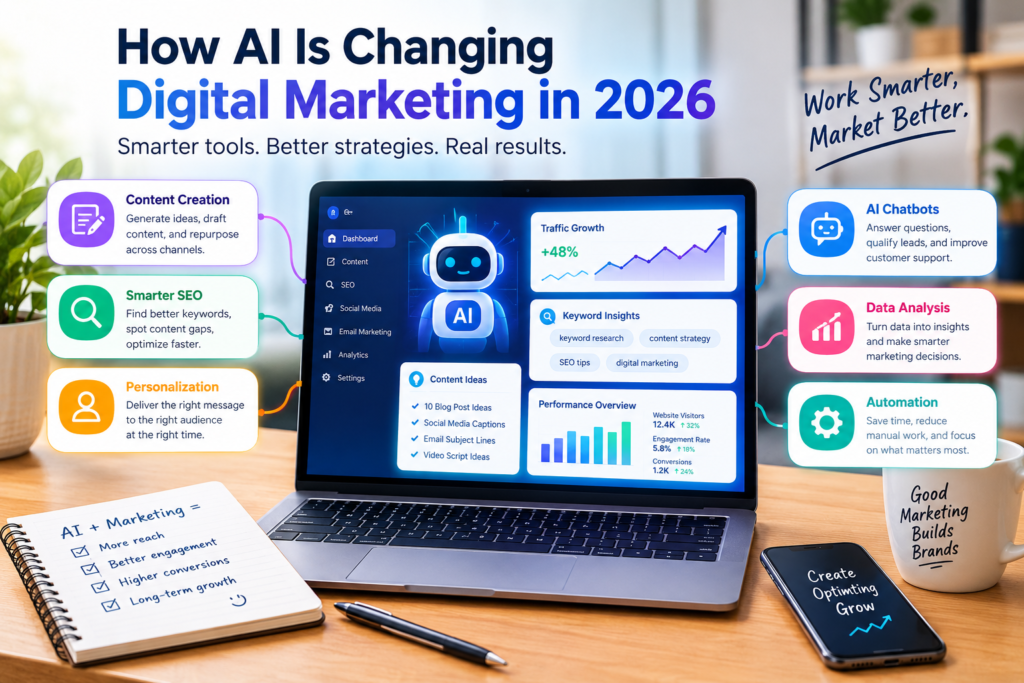
AI in Digital Marketing: Benefits, Risks, and the Good and Bad Sides in 2026

Digital marketing is evolving faster than ever, and artificial intelligence (AI) is playing a major role in that transformation. From personalized advertisements to AI-powered content creation, businesses are finding new ways to connect with customers, save time, and improve their marketing strategies. Whether you’re a blogger, business owner, content creator, or marketing beginner, understanding AI can help you stay competitive in the digital world. But how exactly is AI changing digital marketing, and how can you use it effectively? Let’s explore. What Is AI in Digital Marketing? AI in digital marketing refers to using artificial intelligence technologies to analyze data, identify patterns, automate tasks, and improve marketing decisions. Traditionally, marketers spent hours researching keywords, analyzing customer behavior, writing content, and managing advertising campaigns. AI tools can now assist with many of these activities, helping marketers work more efficiently. For example, an AI-powered tool can help a blogger brainstorm article topics, suggest relevant keywords, summarize research, or develop an outline for a new blog post. However, AI isn’t a replacement for human creativity. The best results often come when marketers combine AI’s speed with their own experience, judgment, and understanding of their audience. 1. AI Is Making Content Creation Faster Creating quality content consistently is one of the biggest challenges in digital marketing. AI tools can make the process easier by helping marketers generate ideas, organize information, and improve their writing. Here are some ways AI can support content creation: For example, a blogger writing about SEO could use an AI assistant to brainstorm ten article ideas related to keyword research. The blogger could then research the most promising idea, add practical examples, verify the facts, and publish an original article. The key is to use AI as a starting point, not as a substitute for valuable, original content. Always review AI-generated material for accuracy, usefulness, originality, and relevance. 2. Smarter SEO and Keyword Research Search engine optimization (SEO) helps websites attract visitors through organic search results. AI is making several parts of SEO more efficient. AI-powered tools can help marketers identify keyword opportunities, group related search terms, analyze content gaps, and understand search intent. For example, someone running a technology blog might start with the keyword “cybersecurity tips.” By researching related queries, they could discover opportunities to write about password security, phishing prevention, and online privacy. Instead of publishing one broad article, the blogger could develop several focused posts that address specific reader needs. AI can also assist with content audits and internal-linking suggestions. However, AI-generated keyword recommendations aren’t automatically accurate or valuable. Marketers should still evaluate search intent, competition, audience relevance, and available search data before choosing which keywords to target. 3. Personalized Marketing Is Becoming More Effective Today’s customers expect relevant experiences. They are more likely to engage with content, offers, and recommendations that match their interests. AI can help businesses personalize marketing by analyzing patterns in customer behavior and preferences. For example, an online bookstore might recommend books based on a customer’s previous purchases or browsing activity. An email marketing platform might help a business segment subscribers according to their interests. Personalization can make communication more useful and improve the customer experience. However, businesses must handle customer information responsibly. Transparency, appropriate consent, and respect for privacy should remain essential parts of every marketing strategy. 4. AI Chatbots Are Improving Customer Support Customers often want quick answers about products, services, shipping, pricing, or business hours. AI-powered chatbots can help businesses respond to common questions without requiring a team member to handle every interaction manually. For small businesses, this can be particularly helpful. Imagine a digital marketing agency receiving repeated questions about its services. A chatbot could answer basic inquiries, explain available packages, and direct visitors to relevant website pages. More advanced systems can assist with lead qualification and appointment scheduling. Still, chatbots have limitations. They may misunderstand questions or provide incorrect answers. Businesses should offer a clear way to contact a human when a question requires personal attention or expert judgment. 5. Better Data Analysis and Marketing Decisions Digital marketing generates enormous amounts of data, including website visits, email clicks, social media engagement, and advertising performance. Understanding this information can be difficult, especially for beginners. AI tools can help marketers identify patterns, summarize reports, and highlight areas that may need attention. For instance, if a blog receives plenty of visitors but few newsletter subscriptions, a marketer could investigate whether the signup form is difficult to find or whether the newsletter offer provides enough value. The important thing is to treat AI-generated insights as recommendations to investigate, rather than unquestionable conclusions. Good marketing decisions combine data, business goals, and an understanding of real customer needs. 6. How Beginners Can Start Using AI in Digital Marketing You don’t need advanced technical skills or a large budget to begin experimenting with AI. Here are five practical steps: Start small and focus on solving real problems. You can expand your use of AI as you learn what works for your audience. Conclusion Artificial intelligence is changing digital marketing by helping businesses create content, improve SEO research, personalize customer experiences, automate routine tasks, and analyze performance. But AI alone doesn’t guarantee marketing success. Strong strategies still depend on understanding your audience, delivering genuine value, protecting customer privacy, and making informed decisions. For bloggers, marketers, and business owners, the best approach is to combine AI’s efficiency with human creativity and critical thinking. The future of digital marketing isn’t simply about using more AI. It’s about using AI intelligently to create better experiences for real people. Start experimenting with one practical application today, learn from the results, and build your strategy from there. SEO Details for BloggersBuzz SEO Title: How AI Is Changing Digital Marketing in 2026 Focus Keyword: AI in digital marketing Related Keywords: Meta Description: Discover how AI is transforming digital marketing through content creation, SEO, personalization, chatbots, and data analysis. Suggested URL Slug: ai-in-digital-marketing-2026 Suggested Category: Digital Marketing Suggested Tags: Artificial Intelligence, Digital Marketing, SEO, Content Marketing, Marketing Automation Suggested Featured

Blog

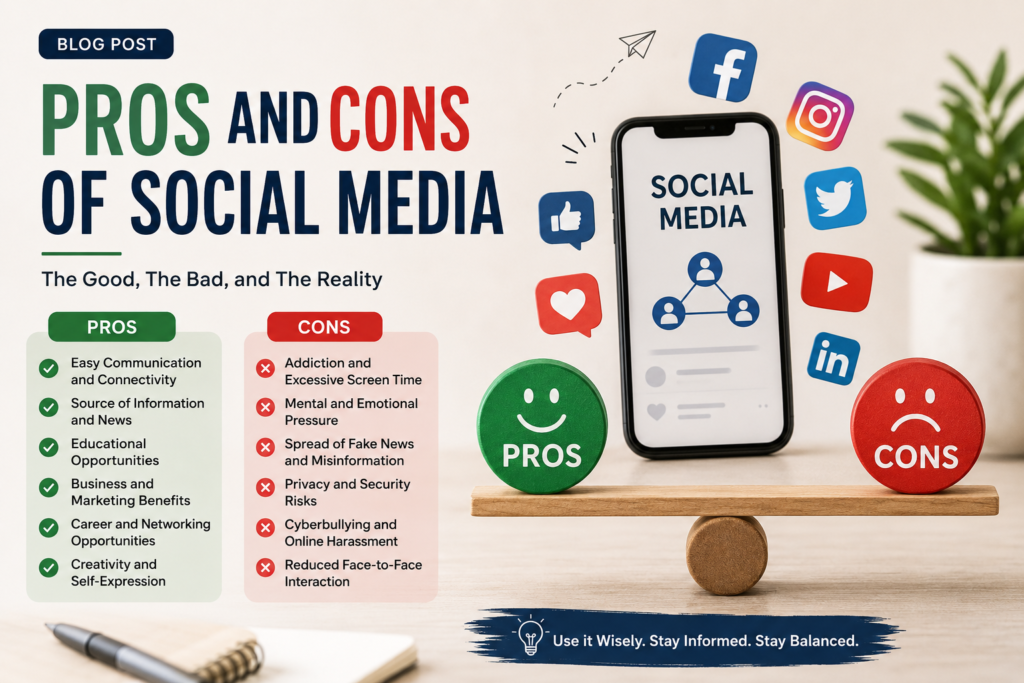
The Pros and Cons of Social Media: Is It Helping or Hurting Our Lives?

Social media’s pros and cons have become an important part of modern life. Platforms such as Instagram, Facebook, YouTube, LinkedIn, X, and Snapchat allow people to communicate, share information, learn new things, and build connections from almost anywhere in the world. What started mainly as a way to stay connected with friends and family has now become a powerful tool for education, business, marketing, entertainment, and professional networking. However, like any technology, social media has both advantages and disadvantages. Understanding its positive and negative effects can help people use it in a healthier and more responsible way.Pros Pros of Social Media 1. Easy Communication and ConnectivityPros One of the biggest advantages of social media is that it makes communication quick and easy. People can stay connected with family members, friends, classmates, and colleagues even when they live in different cities or countries. Messages, video calls, photographs, and updates can be shared instantly. Social media has made the world feel smaller by allowing people to maintain relationships despite geographical distances.Pros 2. Source of Information and News Social media provides access to a huge amount of information. Users can follow newspapers, educational pages, experts, organizations, and professionals to stay updated about current events and new developments. Important announcements and breaking news can reach millions of people within minutes. However, users should verify information before believing or sharing it because not everything posted online is accurate. 3. Educational OpportunitiesPros Social media can be an excellent learning platform. Students can find educational videos, tutorials, study materials, online discussions, career advice, and expert opinions. Platforms such as YouTube and LinkedIn can help students learn practical skills that may not always be taught in classrooms. For example, a student interested in digital marketing can learn about SEO, social media marketing, content creation, and advertising through free online resources. 4. Business and Marketing BenefitsPros Social media has transformed the way businesses reach customers. Small businesses can promote their products and services without spending huge amounts of money on traditional advertising. Companies can create content, run advertisements, interact with customers, and build their brands online.Pros Social media is particularly useful for small businesses and startups because it gives them an opportunity to reach a large audience and compete in a digital marketplace. 5. Career and Networking OpportunitiesPros Social media can also support professional growth. Platforms such as LinkedIn allow students and professionals to showcase their skills, achievements, projects, and experience. Users can connect with recruiters, companies, industry experts, and other professionals.Pros For students, maintaining a professional online presence can open doors to internships, jobs, collaborations, and networking opportunities. 6. Creativity and Self-Expression Social media gives people a platform to express themselves. Users can share their writing, photography, artwork, videos, opinions, and other creative work. Talented individuals can build an audience without depending entirely on traditional media companies. Many creators have turned their online presence into successful careers by consistently producing valuable and engaging content. Cons of Social Media 1. Addiction and Excessive Screen Time One of the major disadvantages of social media is excessive use. People can spend hours scrolling through posts, watching short videos, and checking notifications without realizing how much time has passed. This can reduce productivity and interfere with studies, work, sleep, and real-life relationships. Developing healthy screen-time habits is therefore important. 2. Mental and Emotional Pressure Social media can create unrealistic expectations. People often post carefully selected pictures showing the happiest or most successful moments of their lives. Constantly comparing oneself with these posts can lead to feelings of inadequacy, insecurity, or dissatisfaction. It is important to remember that social media usually shows only a small and edited part of someone’s life. 3. Spread of Fake News and Misinformation Although social media provides quick access to information, it also allows false information to spread rapidly. Misleading headlines, edited videos, fake stories, and unverified claims can influence people’s opinions. Users should check reliable sources and think critically before sharing information with others. 4. Privacy and Security Risks Sharing too much personal information online can create privacy and security problems. Personal photographs, locations, contact information, and other details may be misused. Cybercriminals can also use social engineering techniques to target users. People should use strong passwords, privacy settings, and two-factor authentication and should avoid sharing sensitive information publicly. 5. Cyberbullying and Online Harassment Social media can sometimes become a place for bullying, trolling, and harassment. Negative comments and abusive messages can have a serious emotional impact, especially on young people. Unlike traditional bullying, online harassment can follow a person into their home through their phone or computer. Users should report abusive behavior, block harmful accounts, and seek support when necessary. 6. Reduced Face-to-Face Interaction Although social media helps people stay connected digitally, excessive use may reduce direct interaction. Someone may spend hours communicating online while having fewer meaningful conversations with people around them. Maintaining a balance between online and offline relationships is essential for healthy communication. Conclusion Social media is neither completely good nor completely bad. Its impact depends largely on how people use it. It can help us communicate, learn, promote businesses, develop careers, and express our creativity. At the same time, excessive use can lead to wasted time, privacy problems, misinformation, cyberbullying, and unhealthy comparisons. The best approach is to use social media consciously and responsibly. Setting limits on screen time, verifying information, protecting personal privacy, following positive and educational accounts, and making time for real-life relationships can help users enjoy the benefits while reducing the risks. Ultimately, social media should be a tool that supports our lives, not something that controls them. When used wisely, it can be a powerful platform for learning, connection, creativity, and personal growth.

Scroll to Top